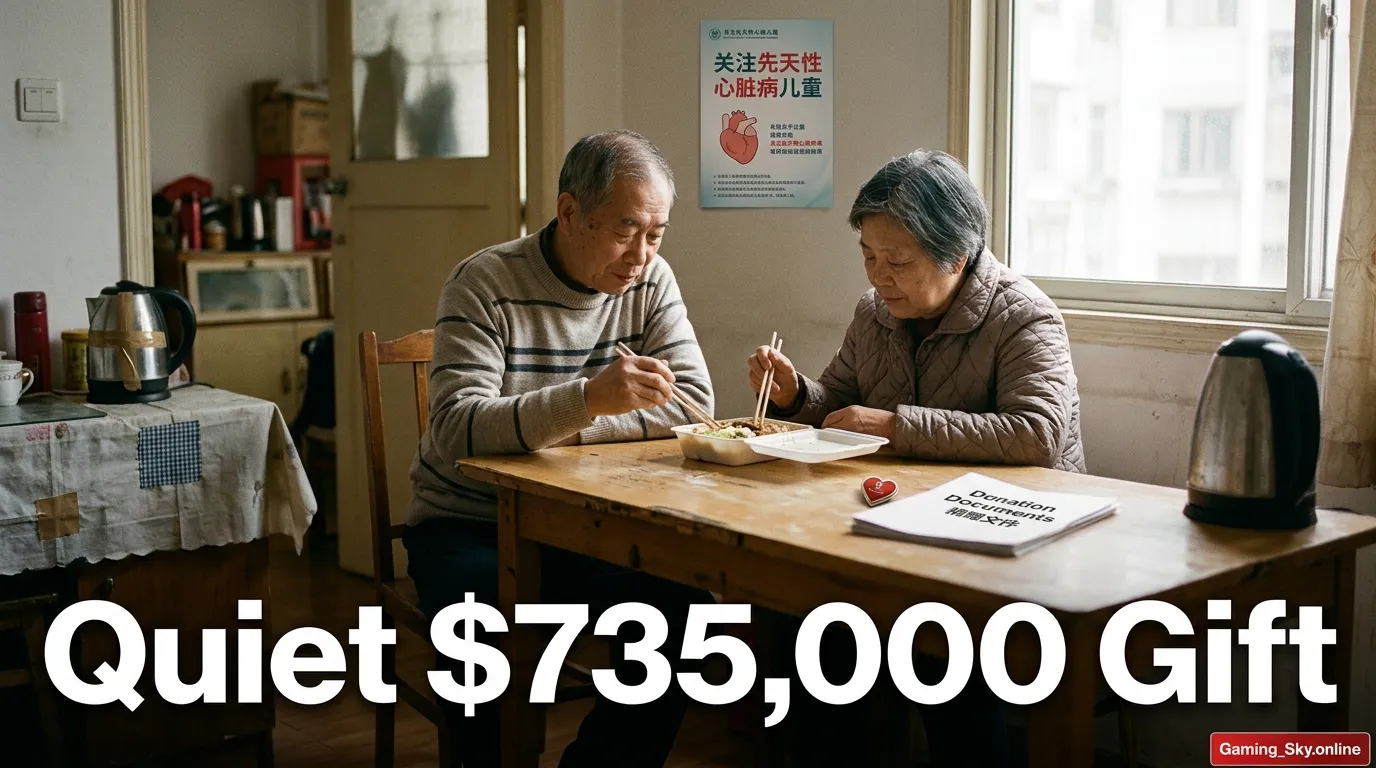
In early 2018, a retired Shanghai teacher named Du Yingrong picked up the phone and dialed Shanghai Yoda Cardiothoracic Hospital. He had often ridden Bus 770 past the building and noticed a poster seeking help for children with congenital heart disease. Within months, he and his wife, Lu Suying, a retired doctor, handed over 5 million yuan — about $735,000 — to fund life-saving surgeries. The money ultimately covered operations for 455 children from poor families.
The couple lived in a roughly 50-square-meter old apartment, split 17-yuan takeaway meals between them for two sittings, and repaired broken belongings with tape. Hospital staff who visited their home urged them to keep some money for themselves. Du refused. He was already in the late stages of cancer. Both he and Lu, who suffered from heart failure, believed their pensions and remaining savings were enough. They had no children of their own.
Their quiet act remained largely private until after both had died — Du in 2018 at age 81, Lu in 2025 at 92. Only then did a charity exhibition and reporting bring the full story into public view.
A Lifetime of Extreme Thrift That Funded Extraordinary Generosity
Du and Lu spent decades working at the same Shanghai institutions, including periods connected to the Second Military Medical University and Shanghai University of Political Science and Law. He taught foreign languages. She practiced medicine. They lived simply long before retirement.
Their daily habits revealed how carefully they managed every yuan. Du would ride a tricycle to a community canteen, buy one 17-yuan boxed meal, and stretch it across two meals for the pair. Glasses with broken frames were held together by layers of tape. Furniture and household items stayed in use far past their expected lifespan. Neighbors and later foundation staff described a home filled with worn but functional objects that the couple simply refused to replace.
This was not deprivation imposed by poverty. The couple had steadily accumulated savings and owned their modest apartment. Their frugality was a deliberate choice that later made their large donation possible. They had also given smaller amounts over the years to disaster relief after events such as the 2010 Yushu earthquake and the 2013 Ya’an earthquake. The 2018 gift to children with heart defects was simply the largest expression of a long pattern.
How One Poster Led to 5 Million Yuan
After Du’s initial call, hospital social worker Cheng Bei visited the couple’s home. She explained that supporting one impoverished child through surgery typically required more than 10,000 yuan. The pair responded by offering 500,000 yuan on the spot — enough, they said, for the first ten children.
Seeing the results, they quickly decided to add another 4.5 million yuan. The full 5 million yuan was channeled through the Shanghai Overseas Chinese Foundation, which managed the funds with transparent procedures. Hospital staff screened eligible patients; the foundation reviewed and disbursed the money; the hospital performed the operations.
When Cheng Bei saw the condition of their apartment, she urged them not to give everything away. Du answered plainly: neither of them expected to live much longer, they still received pensions, and they did not need much money. The donation proceeded.
Legal Arrangements That Kept Their Promise Alive
Because the couple had no children, they took careful legal steps to ensure their wishes would be carried out after their deaths. With help from a notary, they signed intentional guardianship agreements naming the Shanghai Overseas Chinese Foundation as their guardian. They also executed notarized wills directing that their apartment be sold and the proceeds, along with remaining savings of roughly 1.5 million yuan, continue supporting the same cause.
Legal observers have described the arrangement as one of the earliest complete examples in China of a foundation serving as both intentional guardian and recipient of a directed charitable estate. The mechanism protected the couple’s care in their final years and locked in the future use of their assets. According to the foundation, the additional funds are expected to help hundreds more children, with a per-patient support limit set to cover essential surgery costs.
The Real Impact on 455 Families
Congenital heart disease remains the most common major birth defect among newborns in China, with roughly 150,000 new cases each year. For families without means, the out-of-pocket costs for diagnosis, surgery, and recovery can close the window for effective treatment, which is often most successful in the first few years of life.
The couple’s 5 million yuan averaged about 11,000 yuan per child — enough to bridge the gap that medical insurance did not fully cover. Many of the 455 patients came from outside Shanghai. None of the children ever met Du or Lu. Yet foundation staff and families have referred to the couple as the “grandpa and grandma” the children never knew.
The foundation has continued the work. After the couple’s story became public in 2026, additional donations of several million yuan flowed into related programs, showing how one private decision can multiply.
Why Their Story Resonates Beyond the Numbers
In a country where public discussion of philanthropy sometimes focuses on high-profile donors or large institutions, Du and Lu represent a quieter model. They accumulated modest wealth through steady professional careers, spent almost nothing on themselves, and directed nearly everything toward strangers they would never meet. They did so without seeking recognition while alive.
Their choice also highlights practical tools available to older people without close family: intentional guardianship, directed wills, and partnership with a trusted foundation. These mechanisms allowed a childless couple to turn personal assets into ongoing medical support long after their own deaths. In 2026 their ashes were scattered at sea according to their wishes, completing a life that left no biological heirs but hundreds of living beneficiaries.
The exhibition that first brought their belongings into public view displayed ordinary objects — taped glasses, worn notebooks, simple household items. Visitors saw the physical evidence of a frugal life placed beside the knowledge of what that life had enabled. The contrast remains the most powerful part of the story.
Du Yingrong and Lu Suying never claimed credit. They simply noticed a need, calculated what they could spare, and acted. Four hundred fifty-five children received surgery because two people decided that their own comfort mattered less than a stranger’s chance to live.