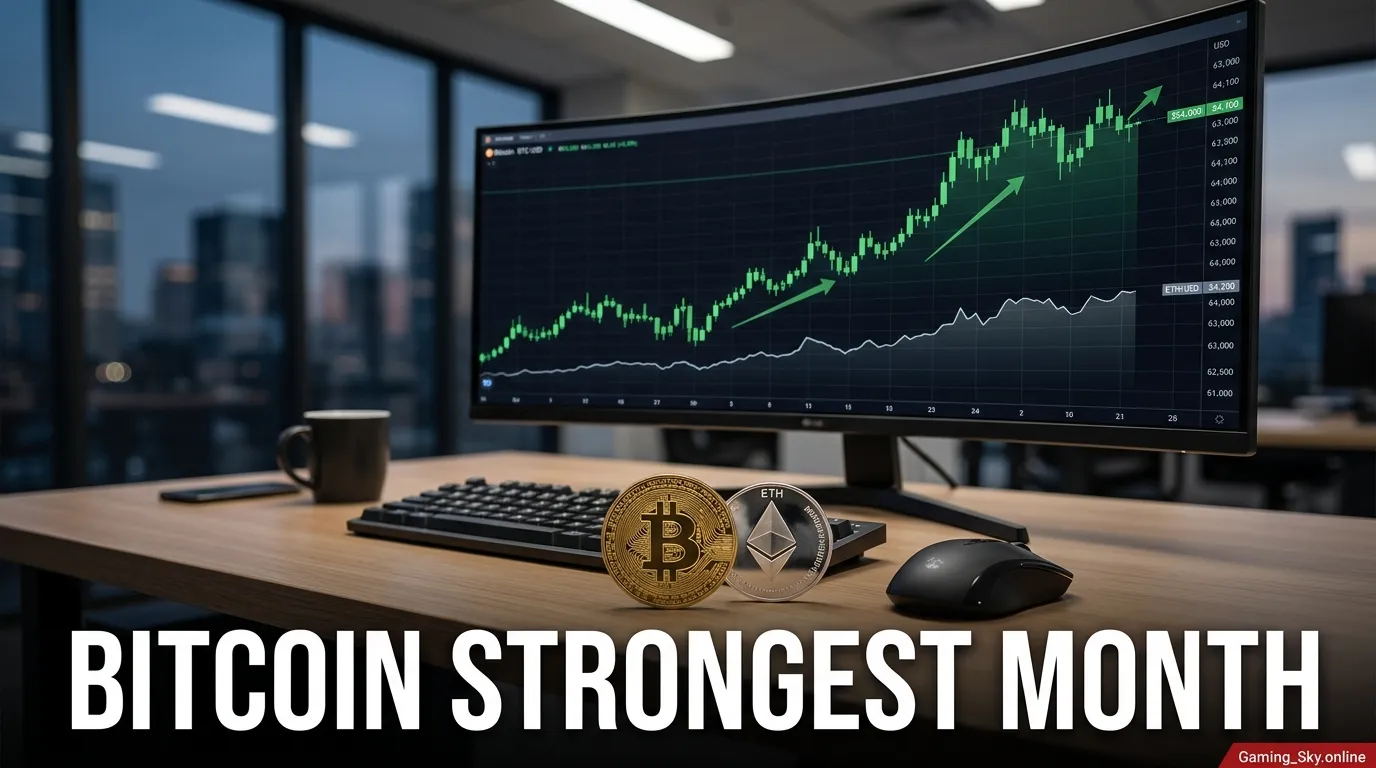
Bitcoin traded near $64,000 on the final day of July as the cryptocurrency market posted its strongest monthly performance in a year. Despite late-session softness that pulled the price lower from recent highs above $65,000, Bitcoin and Ethereum finished the month with solid gains that outpaced many traditional assets.
Bitcoin started July in the high $50,000s to low $60,000s and closed the month roughly 8% to 10% higher. Ethereum advanced more sharply, rising about 20% from levels near $1,600 to trade around $1,900. The broader crypto market followed, delivering its best monthly showing since mid-2025 even as equity indexes and semiconductor stocks struggled.
Late Softness Could Not Erase July Gains
On July 31 Bitcoin fluctuated in a range that included highs near $65,400 and lows in the low $63,000s. Multiple data providers showed the price settling near $64,000 or slightly below by late trading, reflecting profit-taking after a multi-week climb. Ethereum similarly gave back some of its earlier advances but remained firmly higher on the month.
The pullback did little to change the larger picture. Both assets had moved higher after a softer-than-expected U.S. inflation reading in mid-July, absorbed a brief bout of Bitcoin ETF outflows, and then recovered as geopolitical tensions eased. By month-end the crypto complex stood apart from much of the traditional market.
Crypto Outperformed Stocks and Chipmakers
July reversed the narrative that had dominated the first half of 2026. While artificial-intelligence and semiconductor stocks led equity gains earlier in the year, those sectors reversed sharply last month. Chip-related shares fell roughly 22%. The Nasdaq 100 declined about 9%. Smaller-cap indexes also finished lower.
Against that backdrop, Bitcoin’s high-single-digit advance and Ethereum’s near-20% rise stood out. The relative strength was visible even as the Crypto Fear & Greed Index remained in “fear” territory for much of the month, suggesting many participants remained cautious despite the price gains.
Spot Bitcoin ETFs recorded only modest net inflows for July, the weakest monthly total on record according to some trackers. Ethereum ETFs attracted stronger interest. The divergence highlighted continued selective institutional participation even as prices rose.
What Supported the Rebound
Several factors contributed to the monthly recovery. A cooler inflation print reduced some pressure on risk assets. A pause in certain geopolitical developments removed a temporary risk premium. Technical buying emerged once Bitcoin stabilized above the $60,000 level that had acted as support after the June sell-off.
Long-term holders also showed resilience. Data indicated that a large share of Bitcoin supply had remained unmoved for extended periods, consistent with holders choosing not to sell into the earlier weakness. Corporate treasury buyers and derivatives positioning provided additional underlying support, though spot ETF demand stayed muted.
Looking Ahead to August
Historical patterns offer a note of caution. August has often been a weaker month for Bitcoin in comparable phases of the market cycle, with several prior periods showing double-digit declines. Traders are watching whether the $64,000 area continues to hold and whether Bitcoin can reclaim the mid-$65,000 to $67,000 zone that would strengthen the short-term technical picture.
Ethereum’s relative outperformance left the ETH/BTC pair higher for the month, a development that some market participants view as a potential signal of shifting capital flows within crypto. Broader risk sentiment, Federal Reserve policy signals, and the trajectory of institutional inflows will likely determine whether July’s gains extend or fade.
For now the data is clear. Bitcoin held near $64,000 as July ended, Ethereum delivered a stronger advance, and the crypto market closed its best month in a year while many traditional assets lagged. The rebound arrived after a difficult first half of 2026 and left participants debating whether it marked a durable turn or a temporary pause in a longer downtrend.