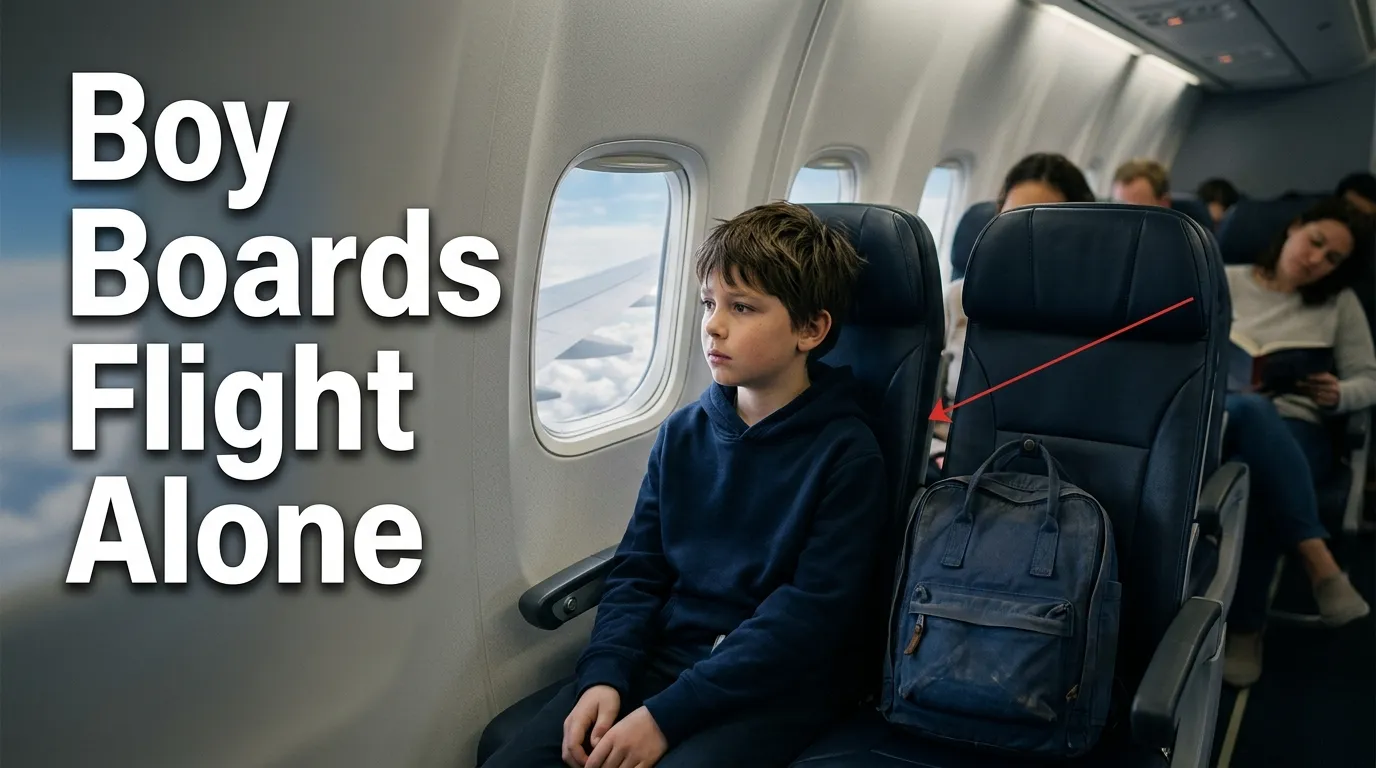
In July 2012, an 11-year-old boy named Liam Corcoran left his mother while shopping near Manchester Airport, walked into the terminal, and boarded a Jet2.com flight to Rome without a passport, ticket, or boarding pass. He passed through five separate security checks undetected, sat among passengers, and was only noticed mid-flight when concerned travelers alerted the crew. The plane continued to Rome’s Fiumicino Airport. Authorities kept him on board and returned him to Manchester the same day.
The incident exposed serious gaps in airport and airline procedures at one of Britain’s busiest hubs, coming just days before the London Olympics. It triggered staff suspensions, official investigations, and lasting changes to how passengers are checked.
How an 11-Year-Old Reached the Airport Alone
Liam had been shopping with his mother, Mary, at Wythenshawe Civic Centre, roughly three miles from Manchester Airport. After a disagreement, he slipped away. Reports indicated he made his way to the airport on foot or by bus. Once there, he entered Terminal 1 during a busy summer period filled with families heading on holiday.
He blended in by tagging along with groups of travelers, particularly families with children. No one stopped him as he moved through the public areas toward departures.
The Security Checks He Evaded
Manchester Airport and Jet2.com later confirmed Liam cleared multiple layers of screening without presenting any documents. Accounts from the time described the sequence as follows:
- Entry into the departures area and initial document check points, where boarding passes are normally shown.
- Passage through the main security screening, including body scanners or metal detectors. Staff scanned him but did not notice he was alone or lacked paperwork.
- Movement through the departure lounge to the gate.
- A gate check where passports and boarding passes should have been verified.
- Final boarding onto the aircraft, where cabin crew normally inspect boarding card stubs.
He was never challenged for identification. Airport officials later stated that the boy went through a full security search, meaning no prohibited items entered the aircraft and passenger safety was not compromised by any physical threat. The failure centered on documentation and the recognition that an unaccompanied minor was present without authorization.
Jet2.com flight LS791 to Rome departed as scheduled. Liam took a seat. Crew did not perform an accurate headcount that would have revealed the mismatch between the number of passengers and the boarding cards collected.
Discovery Mid-Flight and the Return Journey
Passengers grew concerned when they noticed the boy sitting alone and appearing unsettled. Some spoke with him. He reportedly told them he was running away from home. The cabin crew informed the captain, who radioed Manchester Airport. Police there contacted Liam’s mother and told her that her son was safe but airborne and heading to Italy.
When the plane landed at Fiumicino, Liam remained on board while other passengers disembarked. Italian and British authorities coordinated. He spent a short time in the care of airport staff before boarding the return Jet2 flight to Manchester later that day. His mother met him upon arrival.
In later interviews, Liam offered a simple explanation. He said he had only wanted to use the toilet. Once on the aircraft, the doors closed and the plane took off. “Getting on the plane was easier than doing my homework,” he told reporters. “I didn’t have anything on me and no one asked me for anything.”
Immediate Fallout and Official Response
The breach prompted swift action. Jet2.com suspended several members of staff involved in the boarding process. Reports varied between three and five employees. Manchester Airport and the airline launched internal investigations. The Department for Transport opened its own review, describing the episode as an “unusual and serious breach.”
Transport Secretary Justine Greening ordered examinations into how the failures occurred. Airport spokespeople acknowledged that documentation had not been checked correctly at security and at the gate. They stressed that the boy had undergone physical screening, so the aircraft itself faced no security risk from weapons or explosives.
The timing amplified the embarrassment. Britain was preparing to host the Olympic Games. Security was already under intense public and political scrutiny. An 11-year-old walking onto an international flight without papers raised uncomfortable questions about procedures at major airports.
What Changed After the Incident
Jet2.com later confirmed that the suspended staff returned to work after a full investigation. The airline introduced revised procedures. Headcounts of passengers against boarding cards became standard across its flights from all airports. Additional staff training followed. The company said it continued to work closely with Manchester Airport on security processes.
The case highlighted a practical reality of busy airports. During peak summer travel, large family groups move through checkpoints together. An unaccompanied child who appears to belong to a group can slip past distracted or overstretched staff. Reliance on visual assumptions rather than consistent document checks created the opening.
It also showed the value of passenger awareness. Fellow travelers, not crew or ground staff, first identified the problem. Their decision to speak up allowed the situation to be managed before the aircraft emptied in Rome.
Why the Story Still Matters
More than a decade later, the episode remains a reference point in discussions of airport security culture. It demonstrated that physical screening alone does not equal full control of who boards an aircraft. Document verification, gate discipline, and accurate passenger counts form essential layers.
For parents, the event underscored how quickly a child can disappear in a public space and how systems designed for efficiency can miss obvious anomalies. For aviation professionals, it served as a reminder that procedures exist for a reason and that shortcuts, such as skipping routine headcounts, carry real risks.
Liam Corcoran returned home the same day he left. No lasting harm came to him. The systems that failed him were forced to tighten. The story of an 11-year-old who simply wanted the toilet and ended up in Rome continues to illustrate how small lapses can produce extraordinary outcomes when multiple safeguards fail at once.