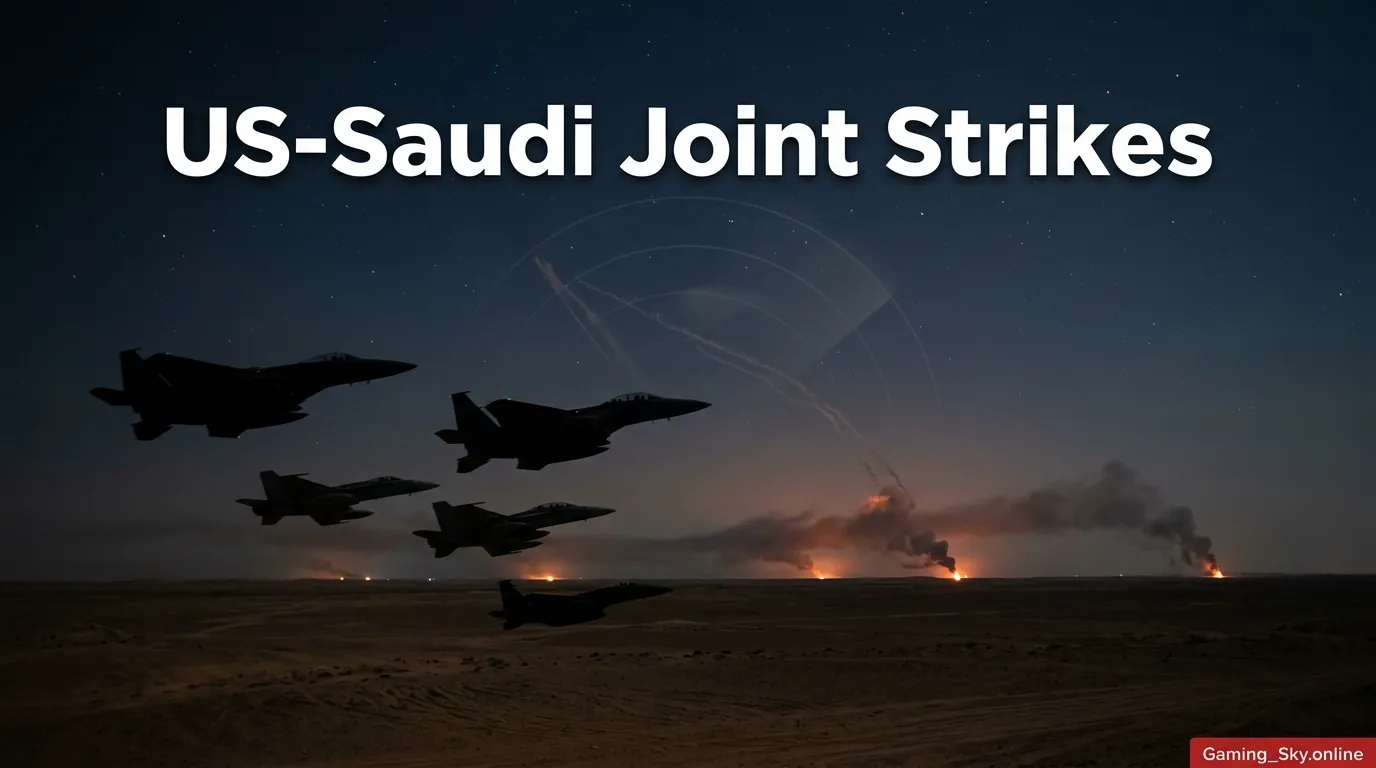
Iran fired a barrage of ballistic missiles at American forces in the Middle East late Tuesday, ending a brief multi-day pause in direct fighting. U.S. defenses intercepted every projectile. Within hours, American and Saudi warplanes hit Iran-backed militia sites across eastern Iraq.
The Iranian missile attack came from the Islamic Revolutionary Guard Corps and targeted U.S. troops based in Jordan. Reports pointed to the Muwaffaq Salti Air Base near Azraq as the main aim. Jordan’s military confirmed it helped intercept five of the incoming missiles. No American casualties or damage resulted from the launch. U.S. Central Command described the action as an attempted surprise attack and stated that forces remain at a high state of readiness.
This marked the first Iranian missile strike on a U.S. base since the pause began late last week. That pause followed nearly two weeks of intensive American strikes on Iranian targets and was meant to create space for diplomacy. Oil prices had eased during the quiet period. The renewed exchanges reversed that calm almost immediately.
What Triggered the Joint Response
In the 72 hours before the missile launch, more than 30 drone attacks had targeted U.S. forces and Saudi energy infrastructure. U.S. officials said the Islamic Revolutionary Guard Corps directed those drones from Iraqi territory. Saudi air defenses intercepted several of the drones aimed at petroleum facilities in the Eastern Province and near Riyadh.
CENTCOM and the Saudi Ministry of Defense then announced precision strikes against logistics hubs and weapons storage sites used by the Iran-aligned groups. U.S. and Saudi fighter aircraft carried out the operation together. Saudi officials stressed they do not seek wider escalation but will answer any aggression against the kingdom’s energy facilities.
Iraq’s Popular Mobilization Forces, the umbrella organization that includes many of the targeted groups, reported at least 20 of its fighters killed and 32 wounded. The group said headquarters in Baghdad and several other locations were hit. Some local reports gave slightly lower casualty figures, but the scale of the damage to facilities was consistent across accounts.
Why Saudi Arabia Joined the Operation
This appears to be the first time Saudi forces have publicly conducted joint combat strikes with the United States against Iran-backed groups inside Iraq during the current conflict. Riyadh has long faced threats from Iranian proxies, including previous drone and missile attacks on its oil infrastructure. The decision to fly alongside American aircraft signals a clearer alignment against the shared pressure coming from Tehran’s network of militias.
The Saudi statement framed the strikes as self-defense. It noted that the drones originated from Iraqi territory and were launched by Iran-aligned groups. Iraqi Prime Minister Ali al-Zaidi ordered an investigation into those launches and reaffirmed that Iraqi land must not be used as a staging ground for attacks on neighboring countries. At the same time, Baghdad condemned the U.S.-Saudi action as a violation of Iraqi sovereignty.
How the Pause Collapsed
The short lull had raised cautious hopes that talks might resume, including discussions over the Strait of Hormuz. Roughly one-fifth of the world’s oil normally passes through that waterway. Iran has used threats and actual attacks on shipping there as leverage throughout the fighting, which is now in its sixth month.
President Donald Trump had paused American strikes on Iran itself to test whether diplomacy could advance. His meeting with Israeli Prime Minister Benjamin Netanyahu in Washington on Tuesday occurred against this backdrop. The Iranian missile launch and the subsequent joint strikes in Iraq quickly complicated those efforts. Mediators who had been working on a possible arrangement for the strait now face a harder climate.
Oil markets reacted at once. Prices jumped more than four percent as traders priced in fresh risk to supply routes. Damage claims from related Houthi activity against Saudi facilities earlier in the week added to the pressure.
What the Strikes Achieved and What Remains Unclear
U.S. and Saudi officials described the targets as terrorist logistics and weapons sites. The Popular Mobilization Forces called the operation a dangerous escalation against official Iraqi security institutions. The distinction matters because the PMF holds a formal place inside Iraq’s security structure even as many of its brigades maintain close operational ties to Iran.
No immediate Iranian response to the Iraq strikes was reported beyond earlier statements rejecting blame for the drone attacks on Saudi Arabia. Tehran’s Foreign Ministry later condemned the joint action. The pattern of recent months suggests both sides still possess the capacity to continue limited exchanges without yet crossing into broader open warfare.
American air defenses have proven effective against the latest ballistic missile salvo. That success does not remove the underlying problem. Iran continues to direct proxies from Iraqi territory, and those proxies continue to test Saudi and American positions. The joint U.S.-Saudi operation shows Riyadh is prepared to answer those tests directly rather than rely solely on American responses.
Regional Implications
Iraq sits in a difficult position. Its government wants to keep the country out of the direct path of the larger conflict, yet powerful armed groups inside its borders answer more readily to Tehran than to Baghdad. Each new round of strikes risks further polarizing Iraqi politics and complicating relations with both Washington and Riyadh.
Saudi Arabia’s public participation also changes the regional dynamic. For years Riyadh preferred quieter measures or relied on American pressure. Flying joint missions marks a more open military commitment. Whether that commitment remains limited to Iraqi targets or expands will depend on how Iran and its partners react in the coming days.
The brief pause had offered a narrow opening. The missile launch and the answering strikes closed it for now. Both sides retain the ability to hit each other’s interests at a distance through proxies and long-range weapons. That reality keeps the risk of wider escalation alive even when neither capital appears eager for full-scale war.
American forces remain on heightened alert. Saudi energy facilities continue to operate under the shadow of further drone threats. Iraqi officials are left managing the fallout on their own soil. The cycle of attack and response that defined the previous weeks has restarted, this time with Riyadh standing more visibly beside Washington.