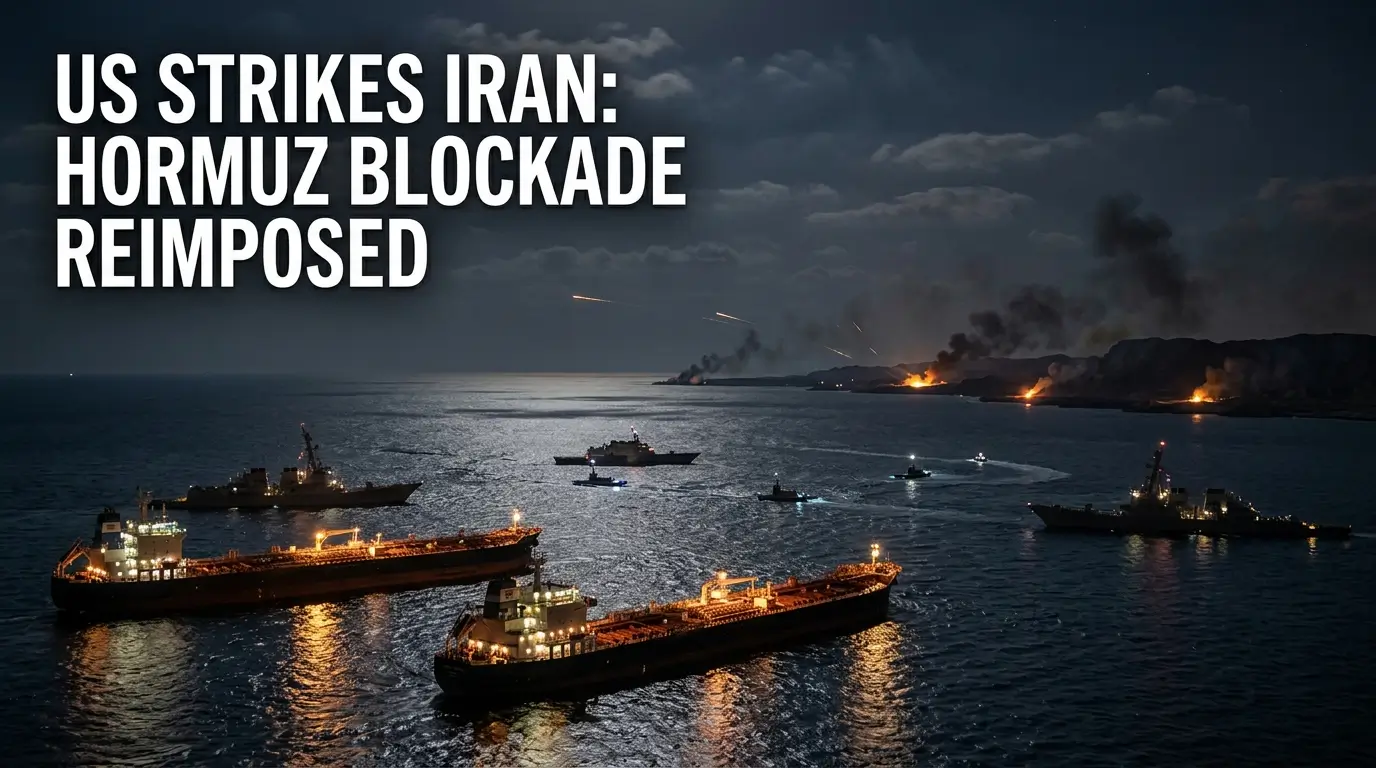
The United States carried out its third straight night of strikes against Iranian targets, marking a sharp escalation in the conflict. President Donald Trump announced the reimposition of a naval blockade on Iranian ports and shipping while floating the idea of charging tolls for safe passage through the Strait of Hormuz. This move has Iran firing back at vessels and threatening wider disruptions in a waterway that carries about one-fifth of the world’s oil.
Tensions boiled over quickly after a fragile truce collapsed. US Central Command hit Iranian coastal defenses, missile sites, drone facilities, and maritime assets in places like Bushehr, Bandar Abbas, Chah Bahar, Jask, Konarak, and Abu Musa. Reports confirm the first combat use of sea drones by US forces in this campaign, targeting naval bases with precision strikes that left fires burning on islands like Kish.
What triggered this latest round of US action
The strikes follow Iranian attacks on shipping. Iran’s Islamic Revolutionary Guard Corps (IRGC) sank a US vessel attempting to pass through the strait without clearance and struck UAE-flagged tankers Mombasa and Al Bahiyah. One Indian sailor died, and others were wounded. Iran also claimed hits on US-linked sites in the region.
Trump responded directly. In public statements, he declared the US was “reinstating the Iranian blockade,” stopping Iranian ships while promising fair access for others — but with a price tag. He proposed a 20% fee on cargo value to cover security costs, positioning the US as the “Guardian of the Strait of Hormuz.” Oil prices jumped in response, with Brent crude climbing above $85 a barrel at one point.
This isn’t entirely new territory. The US has enforced similar measures before, but reimposing them now amid active fighting raises the stakes for global energy markets and naval operations.
How the strikes unfolded over three nights
Night one and two focused on degrading Iran’s ability to threaten shipping. US forces targeted launch sites and command nodes. By the third night, operations expanded to include more maritime assets. Sea drones played a visible role, offering a way to strike without putting manned aircraft at high risk in defended coastal areas.
Iranian media reported explosions and fires across multiple locations, including Qeshm and Kish islands. While not all incidents have independent confirmation, the pattern points to sustained pressure on IRGC naval capabilities. US officials notified Congress as required, framing the actions as necessary to protect freedom of navigation.
Trump’s blockade and toll proposal explained
The blockade specifically targets Iranian vessels and their customers, aiming to choke off Iran’s oil exports and imports. Trump made clear that other nations could still transit the strait, but they would pay for the protection the US provides. Critics quickly pointed out that such tolls challenge long-standing international norms on open waterways.
In practice, this means US naval forces are positioned to intercept and turn back Iranian shipping. Combined with the strikes, the goal appears to be forcing Iran to back down from attacks on commercial traffic. Iran, however, declared the strait closed until further notice and warned of broader disruptions, including potential impacts on the Red Sea.
Iranian retaliation and its immediate effects
Iran didn’t wait long. Beyond the tanker strikes, the IRGC issued strong warnings about oil and gas market chaos if the US keeps interfering. Shipping traffic through the Hormuz area slowed noticeably, with some companies rerouting or delaying voyages. This hits hard because the strait is a chokepoint — no easy alternatives exist for moving Gulf oil to markets in Asia and Europe.
One practical consequence showed up fast: insurance rates for vessels in the region spiked, and some tanker operators paused operations. An Indian sailor lost in the attacks highlights the human cost already mounting for third-party crews caught in the crossfire.
Broader implications for the region and world
This escalation comes after earlier exchanges involving US and Israeli actions against Iran earlier in the year. The current flare-up risks pulling in more players. Allies like the UAE have seen their flagged ships hit, while neighbors worry about spillover.
Oil market reactions and economic ripple effects
Energy traders reacted immediately to the blockade news and strikes. Prices rose sharply as fears grew over supply interruptions. For consumers, this could mean higher gas prices at the pump in coming weeks if the situation drags on. Countries heavily dependent on Gulf oil, such as China, India, and Japan, face particular pressure to secure alternative supplies or diplomatic off-ramps.
Experts watching the situation note that prolonged closure or heavy disruption of Hormuz would be far more damaging than past incidents like the 2019 tanker attacks. Global spare capacity exists but wouldn’t fully offset a major cutoff.
Risks and potential next steps
Both sides have drawn red lines. The US insists the strait remains open to international traffic. Iran sees the blockade and strikes as direct threats to its sovereignty and economy. Further Iranian missile or drone barrages against US assets or shipping remain possible, as do US responses targeting deeper inland facilities.
Common pitfalls in these scenarios include miscalculation — a single incident at sea could widen the conflict rapidly. Naval commanders on both sides now operate with high alert levels, where rules of engagement matter enormously.
Trump’s approach combines military pressure with economic tools. Whether the toll idea gains traction or serves mainly as leverage will depend on how allies and adversaries respond in the coming days. European nations and Gulf states are monitoring closely, with some quietly urging de-escalation.
What this means on the ground for shipping and security
For merchant mariners, the strait has become a dangerous passage. Crews report increased patrols, warnings, and a sense of unpredictability. Companies are reviewing contracts and insurance, while some governments advise against non-essential transits.
On the military side, the introduction of sea drones in combat adds a new layer. These systems allow persistent presence and strikes with less risk to personnel, but they also signal a shift toward cheaper, attritable assets in high-threat environments.
The conflict underscores how vulnerable global trade remains to regional disputes. Even limited fighting around Hormuz sends shockwaves far beyond the Middle East, affecting everything from factory input costs to household budgets.
As the situation develops, the coming hours and days will reveal whether this third night of strikes leads to a quick Iranian concession or a drawn-out naval and air campaign. For now, the blockade is in place, strikes continue, and the world watches the price of oil — and peace — climb.