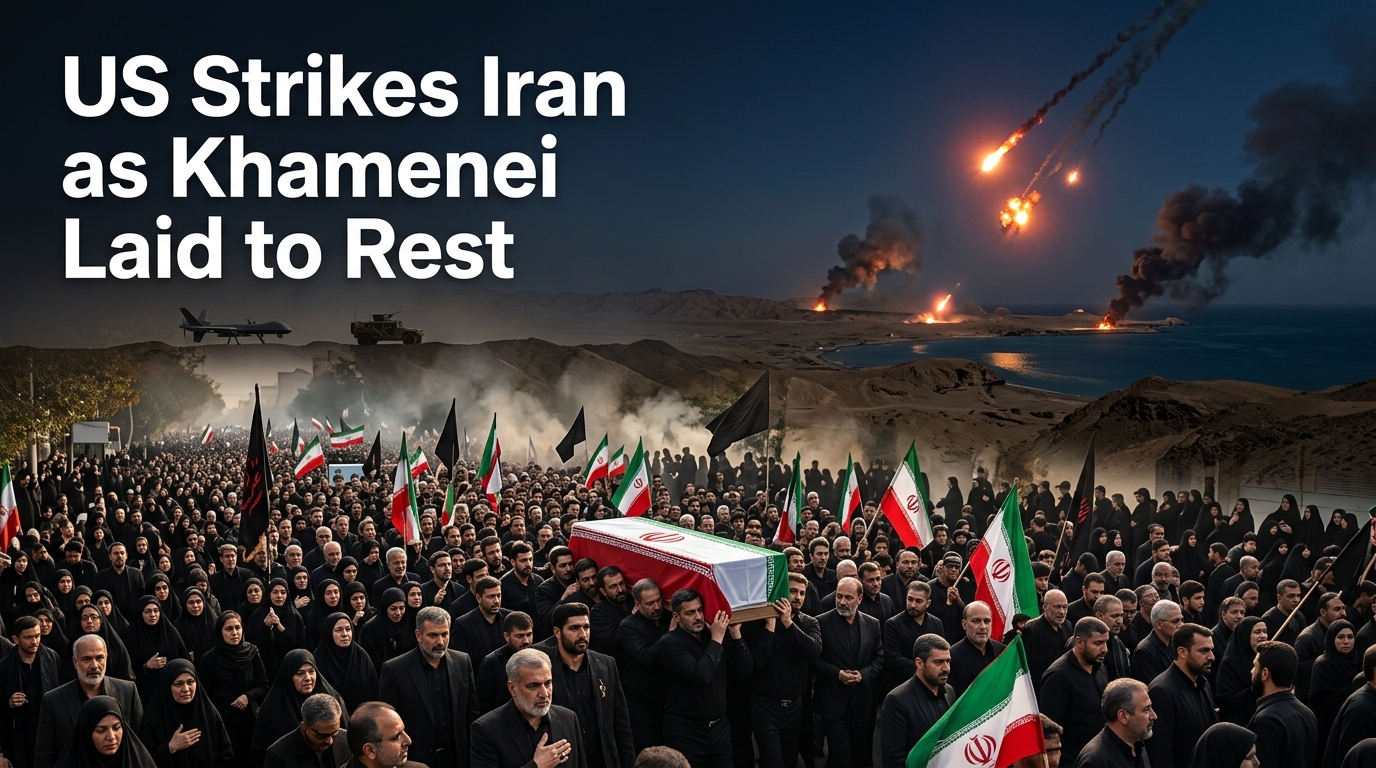
The United States hit Iranian targets in a second round of strikes this week while Iran laid its longtime Supreme Leader Ayatollah Ali Khamenei to rest. This escalation follows Iranian attacks on ships in the Strait of Hormuz and comes on the 132nd day of a war that shows little sign of slowing. The overlap of military action and national mourning captures the raw tension defining the conflict right now.
Fresh Strikes Target Iranian Defenses Near Key Waterway
U.S. Central Command announced strikes on more than 80 sites, focusing on air defenses, radar stations, anti-ship missiles, and Revolutionary Guard boats. The moves came directly after Iran targeted three commercial vessels in the strait, including tankers from the Marshall Islands, Saudi Arabia, and Liberia. One LNG carrier reportedly caught fire, raising immediate fears for crews and cargo.
These second round strikes aim to restore safe passage through a route that handles a huge share of global oil. Iranian actions disrupted a U.S.-protected corridor, prompting the response. Shipping companies already face higher insurance costs and longer routes. For families relying on steady fuel prices at the pump, any prolonged closure hits hard in daily life.
Khamenei’s Burial Draws Massive Crowds in Mashhad
At the same time, Iran completed a week of funeral ceremonies with Khamenei’s burial in his hometown of Mashhad at the Imam Reza shrine. Large processions filled the streets, with mourners carrying flags and chanting slogans. The events stretched across cities and included stops in Karbala, Iraq. State reports spoke of millions participating, though observers described hundreds of thousands in key locations.
Khamenei, killed in February during initial U.S.-Israeli operations, had led Iran for decades. His death created a symbolic blow, yet the regime organized elaborate public rites blending grief and resolve. Anti-U.S. banners appeared amid the crowds, reflecting deep anger. The timing, during active fighting, adds emotional weight for Iranians watching both mourning and new attacks.
Tit-for-Tat Pattern Defines 132 Days of Conflict
The war started with Operation Epic Fury in late February. Strikes took out Khamenei and other leaders, triggering Iranian missile and drone responses across the region. A fragile ceasefire held for weeks before breaking over shipping disputes and compliance issues. The current round revives direct exchanges, with the U.S. revoking oil waivers to increase pressure.
Iran has rebuilt parts of its missile capacity despite losses. Former U.S. officials describe this as a new phase, where ceasefire violations replace all-out fighting but risks remain high. Each side accuses the other of bad faith. Practical realities on the water, like navigating contested zones, test commercial operators daily.
Impact on Global Shipping and Energy Supplies
The Strait of Hormuz matters because it is narrow and vital. Disruptions here affect oil flows to Asia, Europe, and beyond. Tanker crews report heightened alerts, with some vessels avoiding the area entirely. Fuel shortages have appeared in spots, and prices fluctuate with every headline.
Businesses dependent on reliable energy watch closely. A prolonged spike could raise costs for everything from groceries to manufacturing. For people in the Gulf, the threat feels immediate, with memories of past incidents shaping current caution.
Human Cost and Regional Ripple Effects
Casualties mount on all sides. Early Iranian retaliation killed U.S. service members. Iranian cities absorbed damage, and proxy conflicts added layers of violence. Families continue to lose loved ones months into the fighting.
The funerals highlight one side of the toll. Public displays of unity mask underlying strains from sanctions and war weariness. Observers note the regime’s ability to mobilize crowds even now, but questions linger about long-term stability.
What Happens Next in This Escalating War
Both sides signal readiness for more action. U.S. warnings focus on protecting shipping, while Iran vows retaliation and asserts influence over the strait. Mediators face an uphill task rebuilding trust after repeated breakdowns.
Energy markets stay volatile. Shipping firms adjust routes and premiums. Regional neighbors balance alliances with security needs. The 132nd day serves as a reminder that leadership losses and waterway control drive decisions with consequences far beyond borders.
This combination of strikes and state funeral keeps the story in focus. People tracking events see patterns of response and counter-response that affect trade, security, and daily economics. The coming days will reveal whether restraint emerges or the cycle intensifies further.