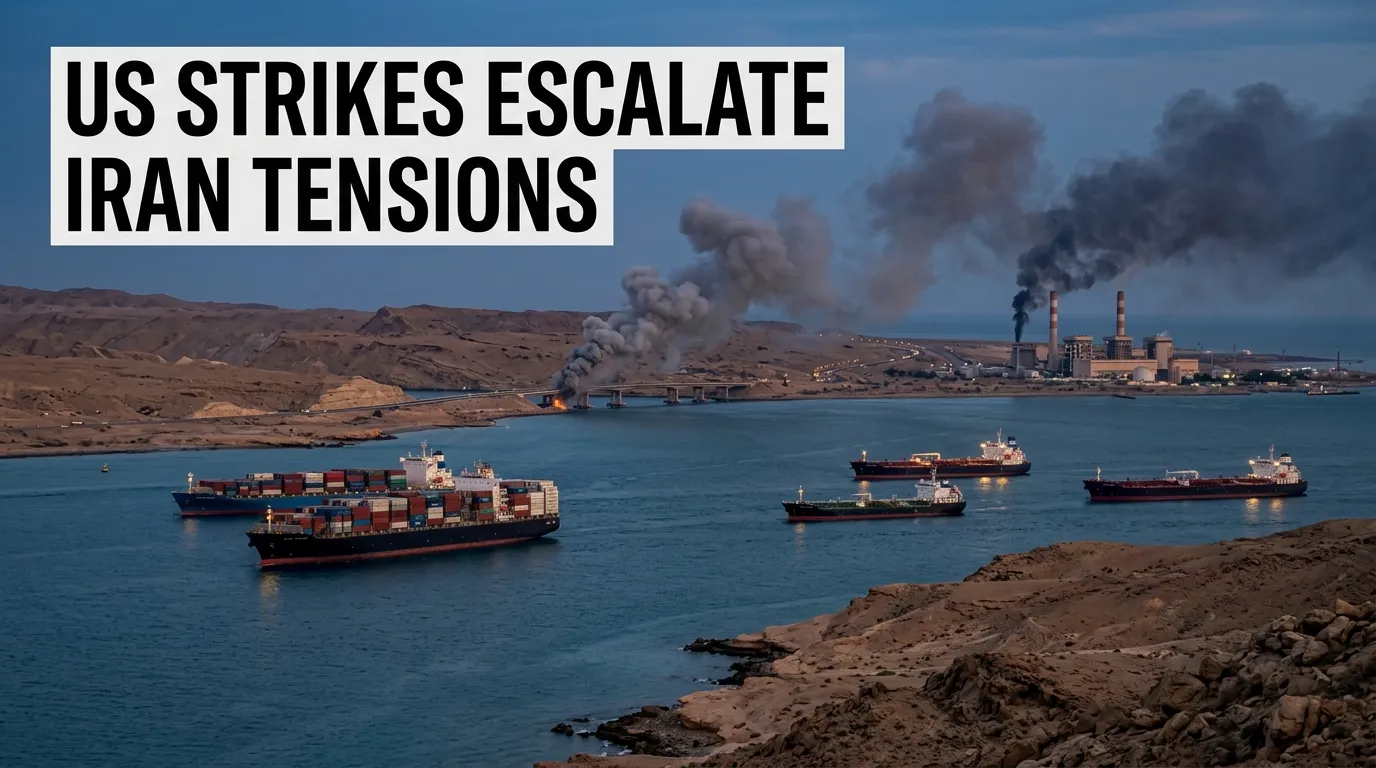
The United States carried out another round of airstrikes on Iranian targets early Wednesday, hitting coastal defenses and other military sites as the conflict with Iran intensifies. President Trump, who had floated a controversial plan to charge tolls on ships passing through the Strait of Hormuz, quickly walked it back. Instead, he warned of even tougher actions, including potential strikes on bridges and power plants, unless Iran returns to negotiations.
This latest escalation comes after days of back-and-forth military moves. The US Central Command confirmed strikes on facilities in several Iranian provinces, focusing on curbing Iran’s ability to threaten shipping in the vital waterway. Oil prices jumped on the news, reminding everyone how quickly things in the Middle East can rattle global energy markets.
The Strikes and Their Targets
US forces launched a 90-minute wave of attacks targeting Greater Tunb Island, Shahid Kalantari Port in Chabahar, and sites in Khuzestan, Ilam, Hormozgan, Bushehr, and Sistan and Baluchestan provinces. These locations included coastal defense systems, cruise missile sites, and other infrastructure that could support Iranian operations in the Strait of Hormuz.
Military analysts note that these targets matter because they directly affect Iran’s capacity to harass merchant vessels. Over the past week, Iranian forces have attacked ships in the area, prompting the US to respond with force. One observer described it as a classic tit-for-tat that risks spinning out of control if neither side blinks first.
The strikes follow an overnight campaign against missile, drone, naval, and coastal assets. US officials say the goal remains protecting international shipping lanes without seeking full-scale war. Yet the repeated operations signal a firmer stance than many expected just months ago.
Trump’s Toll Idea and Swift Reversal
Just a day earlier, President Trump announced plans for a 20 percent fee on cargo moving through the Strait of Hormuz. He framed it as fair payment for US military protection in the region. The idea shocked Gulf allies and raised immediate legal and practical questions.
Critics pointed out that such tolls could violate international norms governing the strait, a critical chokepoint for roughly 20 percent of global oil trade. Within hours, pushback poured in from Saudi Arabia, the UAE, and other partners. Trump reversed course on Tuesday, saying Gulf leaders preferred trade and investment deals over fees.
In public remarks, the president highlighted calls from “kings and emirs” who offered alternative arrangements. The reversal highlights the transactional style that defines much of his approach to foreign policy. One day the US would act as guardian of the strait and collect tolls; the next, it pivots to broader economic partnerships.
The naval blockade on Iranian-linked vessels continues despite the policy shift. This mixed messaging has left shipping companies and energy traders uncertain about safe routes and future costs.
Why the Strait of Hormuz Remains Central
The Strait of Hormuz sits between Iran and Oman, serving as the primary exit for oil from the Persian Gulf. Tankers loaded with crude from Saudi Arabia, Iraq, Kuwait, and the UAE pass through its narrow waters daily. Disruptions here send ripples through gasoline prices worldwide.
Iran has long threatened to close the strait in response to attacks. Recent incidents involving merchant ships underscore the real danger. US strikes aim to degrade Iran’s ability to follow through on those threats, but they also risk Iranian retaliation that could further tighten supplies.
Energy experts watching the situation warn that prolonged instability could push oil above $100 per barrel. Already, insurance rates for vessels in the area have climbed, and some operators reroute at significant extra cost.
Trump’s Warnings of Further Action
Even as he dropped the toll plan, Trump issued strong warnings. He vowed additional strikes on Iranian bridges and power plants if Tehran refuses to resume talks. The comments reflect frustration with stalled diplomacy and a desire to force Iran back to the table.
Iranian officials rejected the pressure, calling the US actions aggression and promising their own responses. Both sides continue trading accusations while quietly exploring possible off-ramps. A 60-day truce or interim nuclear deal has been discussed, but progress remains elusive.
The human cost adds another layer. Reports from Iran mention civilian impacts from the strikes, though details remain limited. In the US, lawmakers question the mounting expenses of sustained operations.
Broader Implications for the Region and Beyond
This cycle of strikes and reversals plays out against a complicated backdrop. The US seeks to protect allies and secure energy flows without getting dragged into another long Middle East conflict. Iran, facing internal pressures and economic strain, balances defiance with the need to avoid total isolation.
Gulf states appear caught in the middle. They value US security guarantees but worry about escalation that could hit their own territory or economies. The shift from tolls to investment deals shows how these countries leverage their financial clout to shape policy.
For ordinary people, the effects show up at the pump and in heightened global tensions. Families in the region live with the constant risk of wider war. Businesses adjust supply chains and hedge against volatility.
What Comes Next
No one expects a quick resolution. The US maintains pressure through military action while keeping diplomatic channels open. Iran shows no sign of immediate capitulation but also avoids steps that would invite overwhelming response.
Observers point to several possible paths. A new round of indirect talks could emerge, perhaps involving intermediaries like Oman or Qatar. Alternatively, tit-for-tat attacks might continue, gradually raising the stakes until one side calculates the price is too high.
President Trump’s willingness to reverse decisions quickly keeps everyone guessing. His emphasis on deals over direct confrontation suggests room for creative solutions, but the fresh strikes demonstrate he is not afraid to use force when he sees fit.
The situation in the Strait of Hormuz and the broader US-Iran conflict will dominate headlines for days to come. Markets will watch closely, diplomats will scramble, and millions of people will hope for de-escalation before things get worse. The coming weeks could determine whether this remains a contained flare-up or spirals into something far more dangerous.