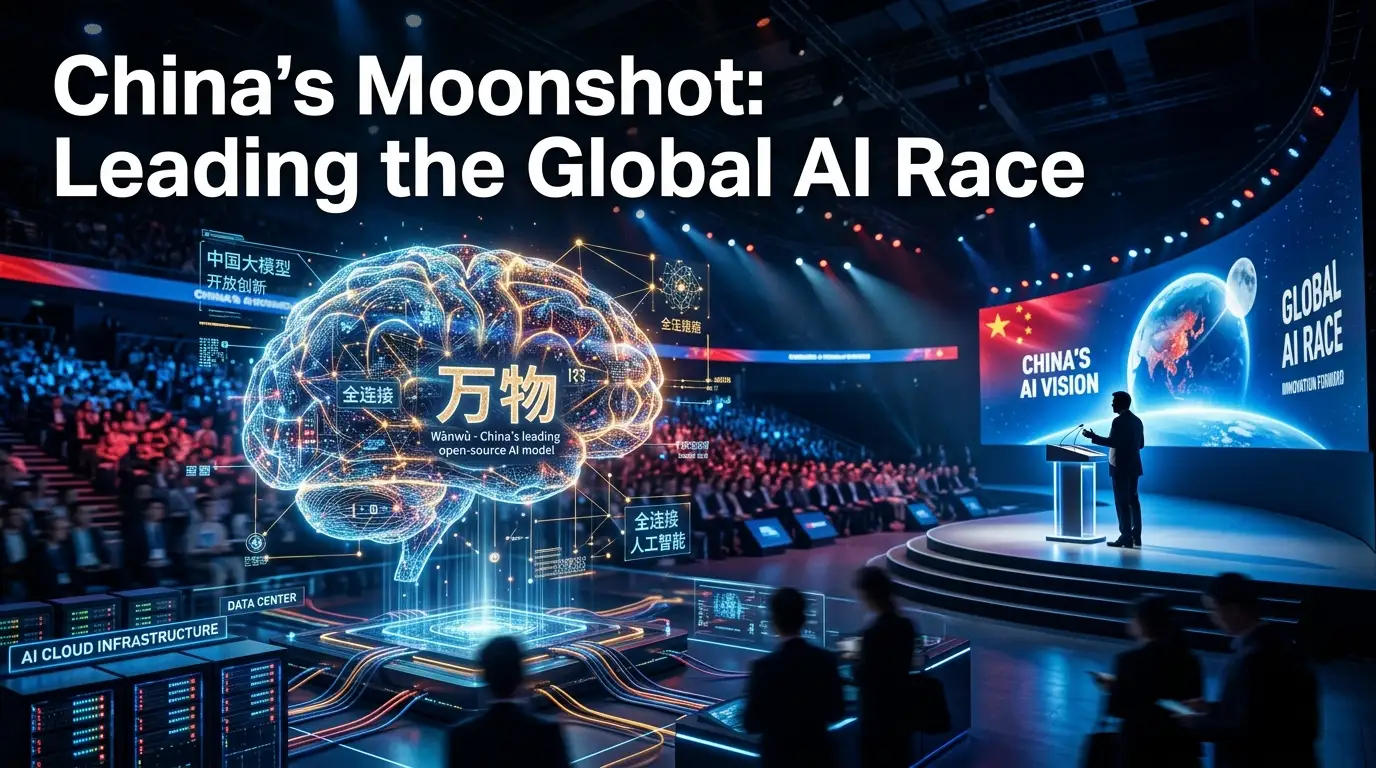
China made a bold statement in the AI race this week. Moonshot AI unveiled its Kimi K3 model, claimed as the world’s largest open-weight system with a massive 2.8 trillion parameters. At the same time, President Xi Jinping delivered a landmark speech outlining China’s vision for global AI cooperation and leadership.
These developments come as tensions with the US over technology continue. China positions itself as a champion of open access while pushing forward its own capabilities.
Moonshot’s Kimi K3 Sets a New Benchmark
Beijing-based Moonshot AI released Kimi K3 on Friday. The model boasts 2.8 trillion parameters and a context window of up to one million tokens. That allows it to handle long, complex tasks like advanced coding, research, and deep reasoning.
Company officials say it approaches the performance of top US systems from Anthropic and OpenAI in certain areas, with strong visual understanding as a standout feature. Independent tests place it near the frontier level, making it a significant step for open models.
The weights will soon be available for download, following a pattern seen with other Chinese releases. This approach lowers barriers for developers worldwide. Smaller labs and researchers in developing countries can now access powerful tools without huge costs.
For everyday users and businesses, this means more options. Developers can fine-tune the model for specific needs, from translation to data analysis. Moonshot built it with agentic workflows in mind, where the AI can manage multi-step processes reliably.
Xi’s Speech at the World AI Conference
President Xi spoke at the World Artificial Intelligence Conference in Shanghai. He called for greater global collaboration on AI development and governance. The message emphasized equitable access, especially for the Global South.
Xi highlighted the risks of “loss of control” and the need to balance innovation with security. He promoted open-source models as a way to share benefits widely, while taking a subtle swipe at US restrictions on technology exports.
China sees AI as a tool for economic growth and diplomatic influence. By sharing expertise and models, Beijing aims to build partnerships beyond traditional allies. This fits a broader strategy of positioning China as a responsible leader in emerging tech.
Why Open-Weight Models Matter
Open-weight models like Kimi K3 let anyone inspect and modify the underlying code. This transparency appeals to many compared to closed systems from big US firms. It speeds up innovation and reduces dependence on a few companies.
In practice, these models run on more affordable hardware. Inference costs drop, making AI practical for smaller enterprises. Chinese labs have excelled here, often achieving strong results with less computing power.
The release follows successes from DeepSeek and others. Together, they show China’s progress despite export controls on advanced chips. Analysts call it a second DeepSeek moment, driven by accessibility.
Implications for the Global AI Race
This move narrows the gap with US rivals. While American companies lead in proprietary frontier models, China gains ground through open alternatives. Downloads of Chinese models have surged on platforms like Hugging Face.
For developers, the choice expands. You can run powerful AI locally or on cheaper clouds. Businesses in Asia, Africa, and Latin America benefit from tools tailored to their languages and needs.
Yet challenges remain. Questions linger about data quality, safety, and long-term reliability. US policies aim to protect advantages in chips and talent, creating a fragmented landscape.
Real-World Impact and Practical Examples
Companies already experiment with these models. Coders use them for complex projects that require understanding large codebases. Researchers analyze vast datasets without breaking the bank.
In education, students in under-resourced areas gain access to advanced tutors. Governments explore applications in healthcare and agriculture. The lower costs democratize what was once elite technology.
Of course, risks exist. Open models can be misused if not handled carefully. Strong governance, as Xi mentioned, will be key to managing downsides while maximizing upsides.
China’s Broader AI Strategy
Beijing invests heavily in talent and infrastructure. Startups like Moonshot attract top engineers and funding. The government supports through policies that encourage rapid iteration.
Xi’s vision ties AI to national goals. It supports manufacturing upgrades, scientific research, and international ties. By hosting events like the Shanghai conference, China showcases its progress and invites partners.
This contrasts with more guarded approaches elsewhere. The result is a race with multiple tracks: raw performance, accessibility, and geopolitical influence.
What Comes Next
Moonshot plans further updates. Other Chinese firms watch closely and may follow with their own releases. Global adoption of Kimi K3 will test its real-world strengths.
On the policy side, expect more discussions on AI rules. China pushes for inclusive frameworks, while navigating competition with the US and Europe.
For anyone following tech, these events signal faster change. Powerful AI becomes more available, shifting power dynamics in innovation. The coming months will reveal how quickly the landscape evolves as more players join the open push.
The combination of Moonshot’s breakthrough and Xi’s address underscores China’s determination. They aim not just to catch up, but to shape the future of AI on their terms.