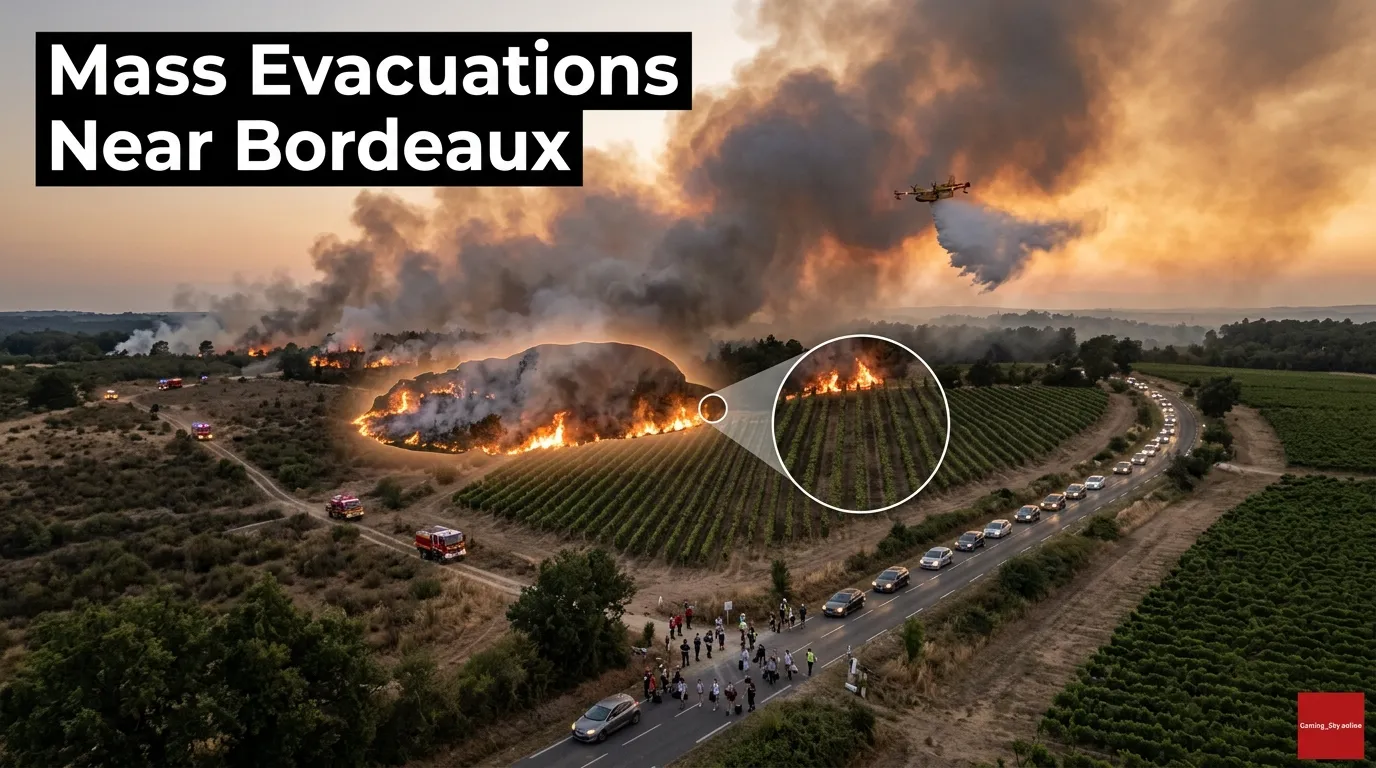
More than 200,000 people have been forced from their homes or ordered into lockdown as massive wildfires rage near Bordeaux in southwestern France and the Spanish capital Madrid. The blazes, fueled by extreme heat and strong winds, have pushed authorities in both countries into emergency mode, with flames threatening tourist spots, homes, and even the famous wine country around Bordeaux.
French officials describe the fires as reaching an unprecedented level, while Spain has declared a national emergency for the first time over wildfires. No deaths have been reported so far, but dozens of firefighters have been injured and hundreds of buildings damaged or destroyed. The situation remains fluid as crews battle shifting winds and dry conditions that keep the flames moving.
How the Fires Reached Critical Levels Near Bordeaux
The main fire in France started earlier in the week near the Cap Ferret peninsula, a popular Atlantic coast holiday destination about 60 kilometers west of Bordeaux. What began as a forest fire quickly grew out of control, consuming tens of thousands of hectares of pine woodland. By Friday, authorities ordered a full evacuation of the peninsula. Residents and tourists left by road and by boat, with some arriving in Arcachon after water taxi and ferry transfers.
Interior Minister Laurent Nunez confirmed that the blaze had become a self-sustaining convective fire, generating its own winds and changing direction unpredictably. It advanced inland toward the Bordeaux metropolitan area. Overnight into Saturday, officials ordered the precautionary evacuation of several western suburbs, including areas around the city’s airport. Towns such as Saint-Médard-en-Jalles, Saint-Jean-d’Illac, Martignas-sur-Jalles, and Saint-Aubin-de-Médoc were cleared, adding tens of thousands more people to the total.
Prime Minister Sébastien Lecornu said fires in the Gironde and Landes departments had forced the evacuation of more than 140,000 people, with some reports putting the French figure closer to 200,000 once additional precautionary moves were counted. Around 22,000 to 30,000 hectares have burned in the region. Dozens of homes and at least one campsite were destroyed. About 42 firefighters suffered injuries, most described as relatively minor.
The French military has been called in, with plans for 1,000 troops to support firefighting efforts. Protective masks were also distributed to shield people from heavy smoke. Travel warnings urge people to avoid the area by road or rail so emergency vehicles can move freely.
Spain Declares National Emergency as Blazes Merge Near Madrid
Across the border, the situation around Madrid has been equally severe. Multiple fires west of the capital and in neighboring Ávila province merged into larger blazes under high temperatures and relentless winds. Regional president Isabel Díaz Ayuso called it the worst fire in the history of the region, describing a perfect storm of heat, wind, and converging fire fronts.
Spain’s government declared a national emergency covering Madrid and Ávila, the first time such a measure has been used for wildfires. This put the central Interior Ministry and the Military Emergency Unit in charge of coordination. More than 60,000 people were either evacuated or ordered to stay indoors. Eight municipalities were cleared, including towns popular with Madrid residents who keep second homes in the area.
Fires have burned thousands of hectares, with some estimates around 6,000 to 9,000 in the Madrid region alone and more in Ávila. Homes were destroyed, roads closed, and smoke drifted toward the capital. Officials said the fires were at times beyond the capacity of local firefighters to contain head-on. Aircraft from other European countries, including Greece and Italy, were requested to help with water drops.
Tourist Areas and Vineyards Under Threat
The timing could hardly be worse. July is peak holiday season along the French Atlantic coast. Cap Ferret, known for its beaches, oyster villages, and upscale residences, emptied out as flames approached the only road off the peninsula. Holidaymakers in campsites and hotels near Bordeaux were woken in the early hours and told to leave as smoke thickened.
Bordeaux itself sits at the heart of one of the world’s most famous wine regions. While the main city has not been directly hit, the approach of fire toward its western suburbs and surrounding countryside has raised serious concern for vineyards and the local economy that depends on them. Smoke has already been noticeable in the city, and authorities closed the airport as a precaution.
In Spain, the affected zone west of Madrid includes residential areas and wooded hills where many people spend weekends. The speed of the fire forced rapid decisions, with phone alerts going out to residents in threatened villages.
Why These Fires Spread So Fast
Both countries have endured successive heatwaves since May, leaving forests and scrubland extremely dry. Strong and sometimes erratic winds then pushed the flames across large areas in short periods. French officials noted that one major fire behaved in ways crews had rarely seen before, creating its own weather patterns and jumping ahead of containment lines.
Scientists have linked the increasing intensity of such events to longer-term warming and drier conditions across southern Europe. This summer’s combination of heat and drought has already produced record burned areas in some regions. Firefighters on both sides of the border have worked around the clock, supported by water-bombing aircraft and ground teams, yet the scale has stretched resources thin.
What Happens Next
French leaders have warned that the fight will be long and difficult. Winds are expected to remain a major factor, and further evacuations cannot be ruled out if the fire continues advancing. In Spain, cooler temperatures and higher humidity were hoped for overnight, but officials remained cautious. European Union support, including additional aircraft, is arriving to bolster national efforts.
For those displaced, temporary shelters have been set up, including large halls in Bordeaux. Many people left with little more than essentials and pets. Local communities have stepped in with food and water for arrivals by boat and road.
The full scale of the damage to homes, forests, and local businesses will only become clear once the fires are brought under control. For now, the priority remains protecting lives as over 200,000 people wait for the all-clear to return.