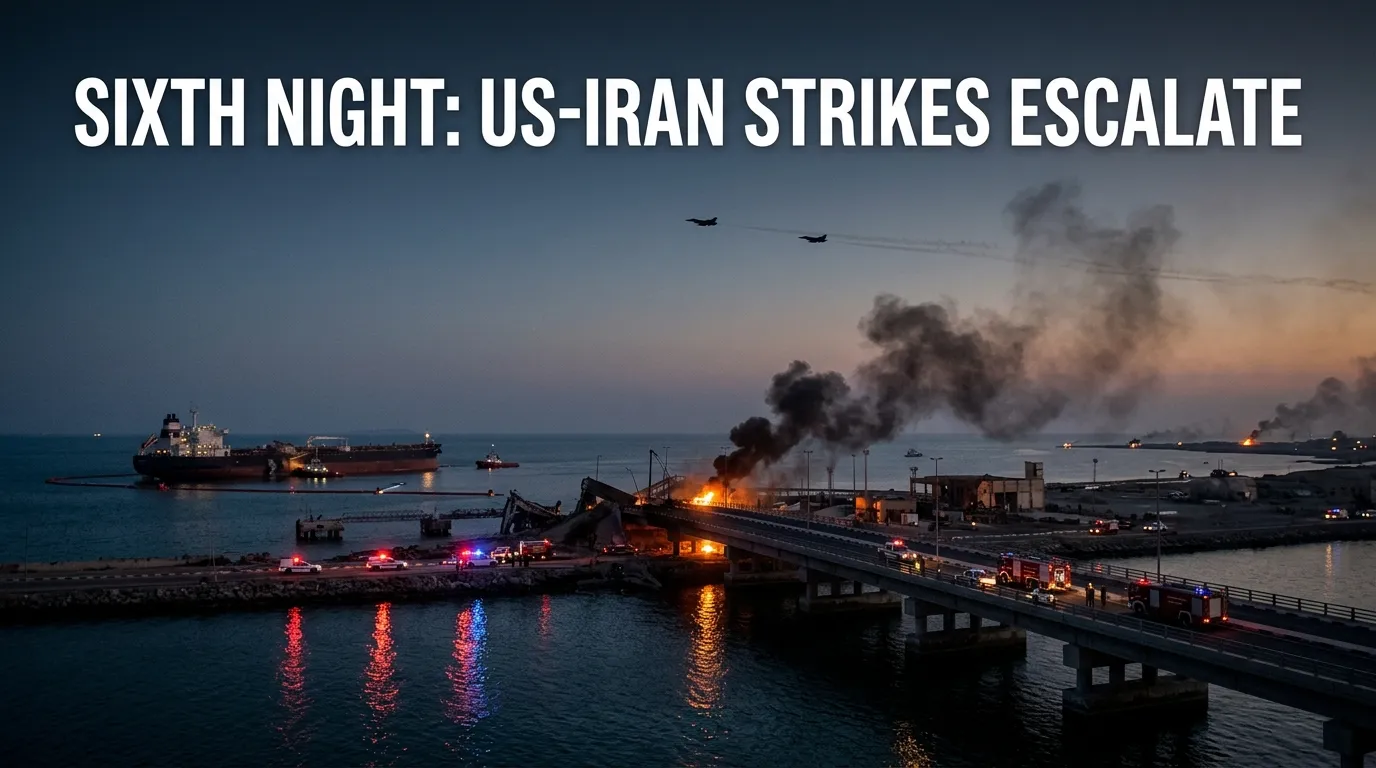
The United States carried out its sixth consecutive night of strikes on Iranian targets, focusing on bridges, ports, and infrastructure around Bandar Abbas. Iran responded by launching attacks on regional sites linked to US interests, keeping the conflict tense with no immediate end in sight.
This escalation centers on control of the Strait of Hormuz, a critical waterway for global oil shipments. Both sides are trading blows that disrupt supply lines and raise fears of wider instability.
The Latest US Strikes Target Key Infrastructure
Overnight, US forces hit multiple bridges in southern Iran’s Hormozgan province. Iranian state media reported strikes on the Gariveh Bridge and Kahurestan Bridge near Bandar Khamir, along with others linking Bandar Abbas to inland routes.
These bridges serve as vital connections for moving goods and military supplies. Disrupting them isolates the port city of Bandar Abbas, Iran’s main hub on the Strait of Hormuz. Witnesses described explosions that damaged roads and left at least seven people dead in one area, with more injuries reported across sites.
US strikes also reached ports and nearby facilities. Reports mention damage to a railway station in Bandar Abbas, an airport in Iranshahr, and areas close to Qeshm Island. A tower at a key port reportedly collapsed. These actions aim to degrade Iran’s ability to threaten shipping in the strait.
Iran’s Retaliation Spreads to Regional Targets
Iran did not stay silent. The Revolutionary Guards claimed strikes on US-linked sites in Oman, Kuwait, and Bahrain. They also targeted tankers and assets in the Strait of Hormuz area.
One Iranian official warned that the war could spread further if US pressure continues. Attacks on Syria and reported actions affecting neighboring countries show Iran’s strategy of hitting back through allies and proxies.
This back-and-forth follows a pattern seen since earlier in 2026. A temporary ceasefire broke down after Iran struck commercial vessels, prompting renewed US action.
Why Bandar Abbas Matters in This Conflict
Bandar Abbas stands out as a focal point. It handles a huge portion of Iran’s maritime traffic and sits right on the narrowest part of the strait. Disrupting operations here directly challenges Iran’s influence over one of the world’s most important energy chokepoints.
People familiar with the region know that blocking or damaging these facilities affects everything from oil exports to local economies. Fishermen, port workers, and truck drivers feel the impact quickly when bridges go down and ports face blockades.
The US has enforced a naval blockade alongside the strikes. This combination squeezes Iran’s ability to move supplies and project power. President Trump has signaled that more infrastructure targets could follow if Iran does not back down.
The Human and Economic Cost So Far
Casualties mount with each night of attacks. Iranian reports put the death toll from recent strikes at several dozen since the current round began. Civilian areas sometimes catch stray damage, adding to the tragedy in cities along the coast.
Economically, the fighting disrupts global markets. Oil prices react to every headline about the strait. Shipping companies reroute vessels or pay higher insurance, costs that eventually reach consumers at the gas pump.
For ordinary Iranians, the strikes compound existing pressures. Power plants and transport links have faced threats before, and now bridges essential for daily life are in the crosshairs.
Background to the Current Escalation
Tensions trace back to February 2026 when major US and Israeli strikes hit Iranian leadership and military sites. A later memorandum of understanding aimed to calm things, but violations over shipping in the Strait of Hormuz reignited direct conflict in July.
Iran has pushed to control routes and collect fees, actions the US views as threats to free navigation. The result is this sustained campaign of strikes on the sixth night and beyond.
What Could Happen Next
No one expects an easy resolution. Diplomatic signals exist, but both sides show determination. The US seeks to further degrade Iranian capabilities, while Iran warns of broader regional consequences.
Possible next steps include more intense strikes on energy infrastructure or Iranian attempts to close parts of the strait using mines or missiles. Allies on both sides could get pulled in deeper.
Observers with experience in these crises note that prolonged fighting often leads to unexpected escalations. Supply chains break, refugee flows increase, and the risk of miscalculation grows.
Practical Implications for the Region and Beyond
Countries like Saudi Arabia, the UAE, and others in the Gulf watch closely. Their own security ties to the US make them potential targets or partners in response.
For shipping firms, the advice is clear: avoid the area when possible and prepare for volatility. Global energy buyers look for alternative sources, though few can fully replace the volume that passes through Hormuz.
This ongoing war highlights the fragility of key maritime routes. One set of bridges damaged or ports hit can ripple through the world economy in days.
The situation remains fluid. Fresh reports come in hourly, and the sixth night of attacks may not be the last. Understanding the targets, responses, and stakes helps make sense of developments as they unfold.