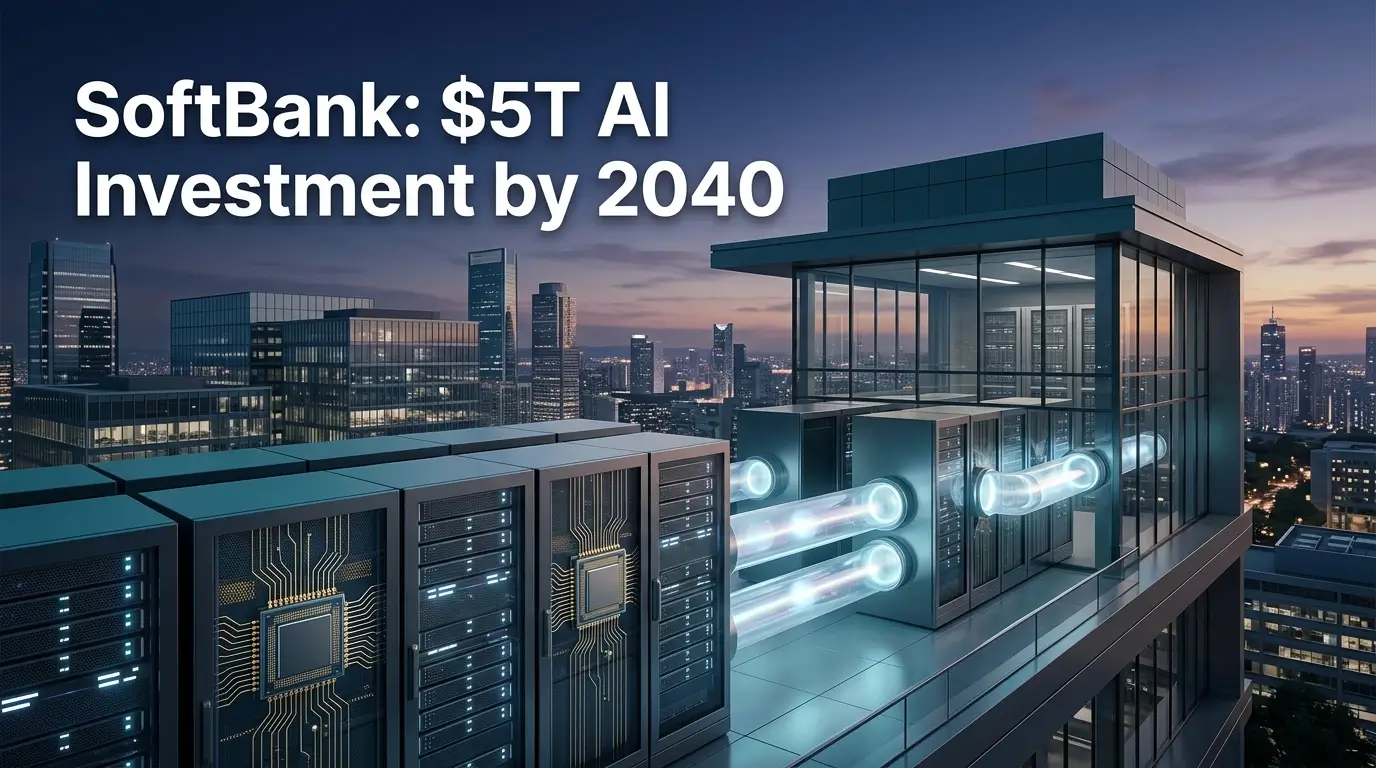
Masayoshi Son, the founder and CEO of SoftBank Group, laid out an ambitious vision for artificial intelligence at the company’s annual conference in Tokyo. He stated that AI development will demand around $5 trillion in annual investment by 2040. Son dismissed any talk of an AI bubble as absurd and pointed to nuclear fusion as a key long-term solution for powering the massive data centers required.
This outlook reflects SoftBank’s aggressive push into AI infrastructure. The company has been making big bets on chips, data centers, and related technologies, positioning itself at the center of what Son sees as the biggest revolution in human history.
The massive scale of AI investment needed
Son’s $5 trillion annual figure, or roughly 800 trillion yen, sounds enormous. He argued it makes sense when you consider AI’s potential contribution to the global economy. By 2040, he expects AI revenue to represent about 20% of world GDP, making that level of spending a relatively small portion overall.
The money would primarily go toward building data center capacity. Son projected the world will need 3 terawatts of such infrastructure by 2040. To put that in perspective, building just one terawatt could cost around $5 trillion on its own. These facilities require enormous amounts of computing power, chips, and especially electricity.
Fusion power as the future energy source
Energy stands out as one of the biggest bottlenecks. Son explained that natural gas will handle most data center needs in the near term. But over time, nuclear fusion will become the main solution, offering cleaner, safer, and potentially cheaper power. Fusion mimics how the sun generates energy and could provide the scale required without the environmental drawbacks of current sources.
This vision ties into broader industry trends. Companies worldwide are racing to secure power for AI, with data centers already consuming significant electricity in many regions. SoftBank’s emphasis on fusion highlights the long-term thinking behind its strategy.
SoftBank’s concrete moves in AI infrastructure
SoftBank is not just talking big. It has committed substantial capital to real projects. In France, the company plans to invest up to €75 billion to develop 5 gigawatts of AI data center capacity. The first phase alone involves €45 billion for 3.1 GW in the Hauts-de-France region.
These facilities will support advanced computing and could create thousands of jobs while boosting Europe’s technological capabilities. SoftBank has also poured money into partnerships with OpenAI, investments in chips through Arm, and other infrastructure plays like the Stargate project in the US.
Chip developments and supply chain focus
AI chips remain critical. Demand for high-performance processors from companies like Nvidia continues to surge, and SoftBank has exposure through its holdings. Son’s comments suggest the company sees opportunities across the entire stack, from hardware to energy solutions.
Investors have responded positively. SoftBank’s shares have performed well amid the AI boom, as the market bets on the company’s ability to capitalize on these trends. However, the scale of investment required raises questions about funding sources and returns.
Risks and practical challenges ahead
Building at this pace involves huge risks. Construction delays, regulatory hurdles, and supply chain issues for specialized equipment could slow progress. Power availability is already tight in many places, which is why Son emphasizes new energy sources like fusion.
On the financial side, sustaining $5 trillion in yearly global spending means coordinated efforts from governments, private companies, and investors. SoftBank’s own balance sheet and borrowing capacity will be tested as it pursues its share of these projects.
Common mistakes in big tech bets include overhyping short-term gains while underestimating execution challenges. Son’s track record includes both spectacular successes and notable setbacks, so the market will watch closely how these AI plans unfold.
Why this matters for the broader economy
AI infrastructure spending on this scale could reshape industries. It drives innovation in energy, manufacturing, and computing while creating high-skilled jobs. Countries that secure early leads in data centers and power capacity stand to gain competitive advantages.
For SoftBank specifically, success here could significantly boost its net asset value. Son has long focused on maximizing this metric through visionary investments. The AI push represents the latest chapter in that strategy.
As the conference wrapped up, Son’s message was clear. The AI opportunity is real, the investment required is staggering, and SoftBank intends to be a major player. Whether fusion and other technologies deliver on their promise will determine if these bold forecasts become reality. For now, the momentum behind AI continues to build, with SoftBank firmly in the mix.