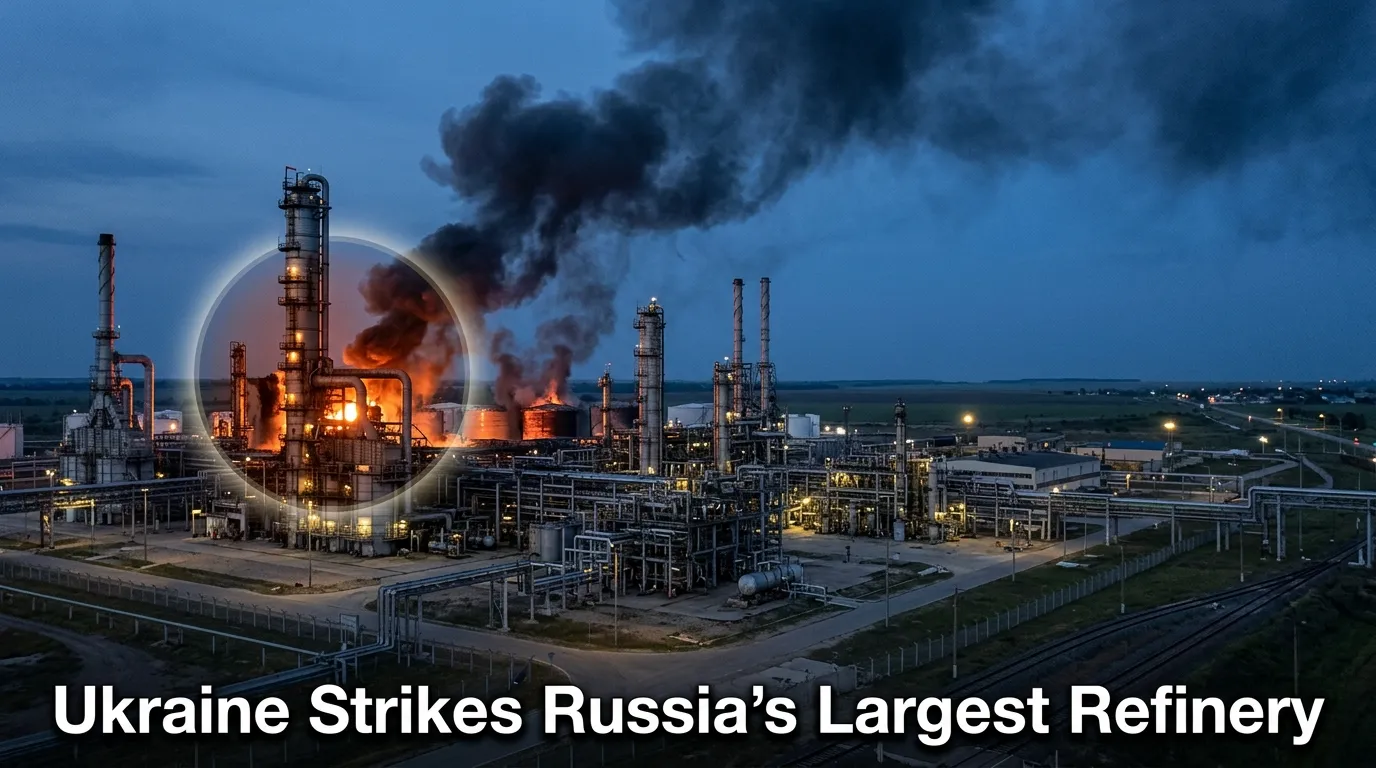
Ukraine has made a bold claim that its forces have struck and effectively destroyed key parts of Russia’s largest oil refinery in Omsk. This development comes as part of intensified drone and missile attacks deep inside Russian territory. The strike highlights Ukraine’s growing ability to hit strategic targets far from the front lines, potentially disrupting Russia’s fuel supplies and war economy.
The Omsk refinery, located in Siberia roughly 2,884 kilometers from Ukrainian positions, processes massive amounts of crude oil. Russian officials and local reports described fires and damage after Ukrainian drones reached the site. President Zelenskyy publicly referenced the operation, noting the historic range and precision of Ukraine’s new deep-strike capabilities.
What Happened in the Omsk Strike
According to available reports, Ukrainian drones circled the facility before hitting critical infrastructure like the crude distillation unit. This part of the refinery turns raw oil into usable fuels such as gasoline and diesel. Videos and satellite imagery shared online showed smoke rising from the complex, with significant flames visible.
Russia’s air defenses apparently failed to intercept the incoming threats. The distance had previously made Omsk seem safe, but Ukraine demonstrated otherwise. Production at the site reportedly dropped sharply, with estimates suggesting at least a 25% reduction in gasoline output. This forced Russia to import fuel for the first time in decades, leading to lines at gas stations and rationing in some areas.
Why the Largest Refinery Matters
Russia’s Omsk refinery stands as one of the biggest in the country, handling Siberian crude and supporting both domestic needs and exports. Damaging it directly affects Russia’s ability to fund its military operations through oil revenues. Energy sales have been a key pillar for Moscow, even as sanctions bite.
Bold strikes like this target the conversion points that turn oil wealth into military power. Without functioning refineries, Russia faces higher logistical costs, fuel shortages for troops and equipment, and pressure on its economy. Ukraine’s strategy focuses on these high-value, specialized facilities rather than scattered oil wells.
Recent Pattern of Ukrainian Attacks
This isn’t an isolated incident. In the days around mid-July 2026, Ukraine also hit other major sites, including the Gazprom Neftekhim Salavat complex in Bashkortostan, over 1,500 km away. That facility, another key gasoline producer, halted operations after drone strikes on its primary units.
Ukrainian Special Operations Forces claimed successful hits on critical equipment at Salavat, working in coordination with local underground groups. These operations show improved range and intelligence capabilities. Russia has seen its overall refinery capacity drop significantly, with some analyses pointing to around 40% reduction from cumulative Ukrainian actions.
Russia’s Response and Challenges
Russian authorities downplayed the damage initially but had to acknowledge fuel supply issues. Repair work on such large industrial sites takes months, and replacement parts face hurdles due to sanctions. Air defense systems are stretched thin, forcing difficult choices about protecting distant facilities versus front-line areas.
Moscow has tried to adapt by moving some production or increasing imports, but these measures add costs and expose vulnerabilities. Fuel shortages affect everything from civilian transport to military logistics, creating ripple effects across the country.
Impact on the Broader Conflict
These refinery strikes put real pressure on Russia’s war machine. Oil revenues help pay for weapons, troops, and operations. Disrupting refining capacity doesn’t stop oil extraction entirely, but it limits what Russia can use or sell effectively.
Experts note that sustained attacks could force Russia to divert resources from offensive operations to protect infrastructure. For Ukraine, this approach levels the playing field somewhat by hitting economic targets that support the invasion.
Zelenskyy emphasized that Ukraine focuses on legitimate military-related targets, contrasting it with Russian attacks on civilian sites. The development of domestic ballistic missiles and long-range drones marks a shift in Ukraine’s defensive posture.
Global Energy and Economic Ripples
The Omsk strike and similar actions contribute to oil price volatility on world markets. Traders watch Russian supply disruptions closely, especially with other global factors at play. While Russia reroutes some exports, refined product shortages create headaches for buyers.
Countries relying on Russian fuel blends or facing higher prices feel indirect effects. For Russia, lost refining capacity means lower export earnings in processed fuels, which often command better margins than crude.
How Ukraine Reached So Far
Reaching Omsk required significant advances in drone technology, range, and navigation. Ukrainian forces have iteratively improved their systems to evade defenses and strike accurately over vast distances. Cooperation with internal Russian opposition groups reportedly aids targeting and intelligence.
This capability didn’t appear overnight. Years of innovation under wartime constraints produced results that surprise many observers. The 1,700+ mile reach to Omsk sets a new benchmark for Ukraine’s strike potential.
Risks and Limitations
While effective, these strikes carry risks. Russia could escalate responses, targeting Ukrainian energy infrastructure more aggressively or attempting cyber and sabotage operations. Rebuilding damaged refineries might take time, but Russia has shown resilience in patching up facilities before.
Ukraine must balance deep strikes with needs closer to the front. Supplies of drones and missiles aren’t unlimited, and each long-range operation demands careful planning.
What Comes Next
The coming weeks will reveal the full extent of damage at Omsk and other sites. Russia will likely announce repair timelines and mitigation steps, while Ukraine continues to publicize successful operations to maintain pressure.
This phase of the conflict shows Ukraine proactively shaping the battlefield by attacking the economic foundations of Russia’s war effort. Fuel shortages and higher costs could influence Russian decision-making on the ground and at the negotiating table.
Observers expect more such strikes as Ukraine refines its capabilities. The Omsk claim underscores a clear message: no part of Russia’s energy infrastructure is truly out of reach anymore.
The situation remains fluid, with both sides adapting rapidly. For now, the destruction claimed at Russia’s largest refinery adds another layer of strain to an already grinding conflict, with consequences that extend beyond the immediate battlefield.