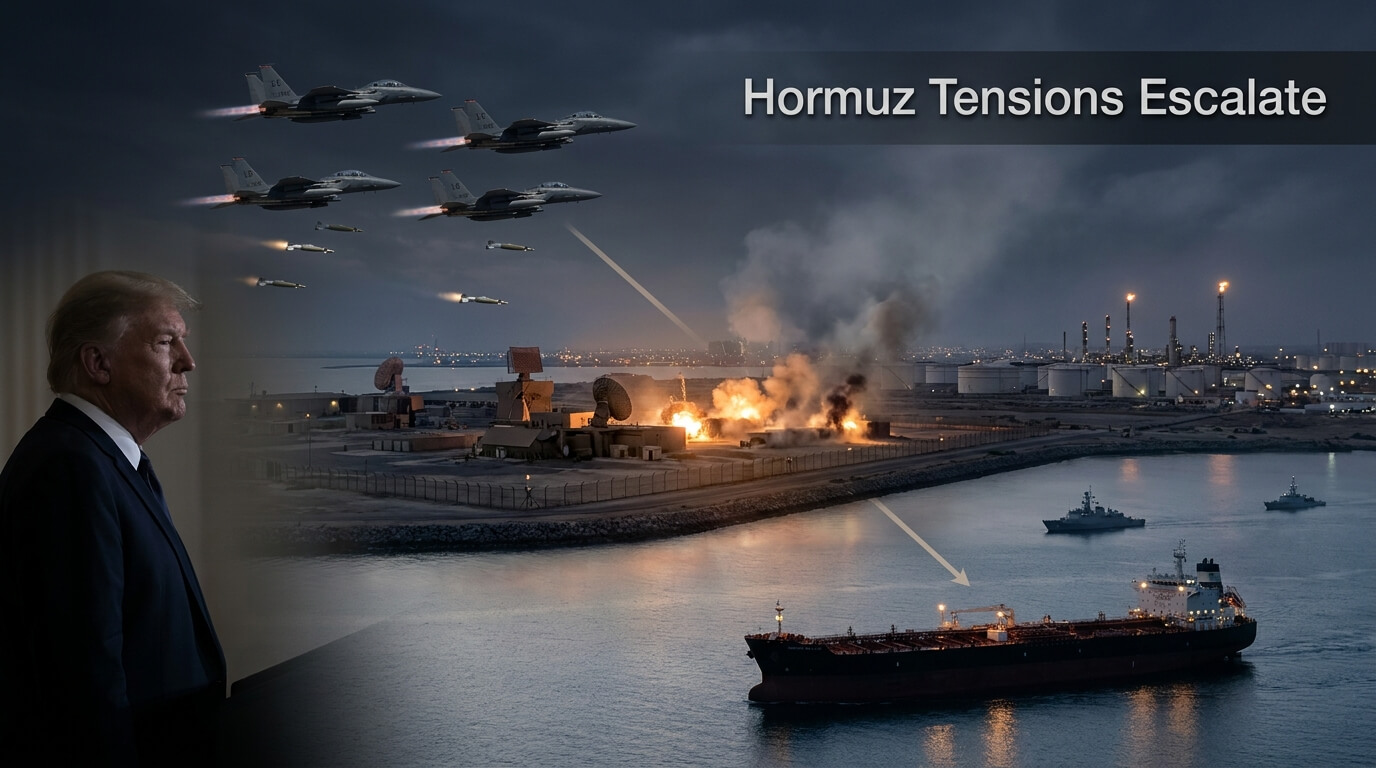
The United States carried out a new round of airstrikes on Iranian targets early Thursday, hours after President Trump stated that the ceasefire with Iran was finished. This escalation follows Iranian attacks on commercial tankers in the Strait of Hormuz and comes amid rising tensions that have already spilled into the Gulf region. Oil prices jumped sharply on the news, and the situation is drawing intense global attention as it overlaps with ongoing NATO discussions.
Reports indicate the US hit around 80 to 170 targets over the past two days, focusing on military sites tied to Iran’s ability to disrupt shipping. Trump described further dealings with Tehran as a waste of time and referred to Iranian leadership in harsh terms during remarks at the NATO summit. The moves mark a sharp turn from the fragile truce that had been in place.
Details of the US Strikes
US Central Command confirmed the latest actions targeted Iranian capabilities linked to threats in the Strait of Hormuz. Blasts were reported in southern Iran, with the military emphasizing strikes on facilities that support naval and missile operations.
This second day of US action built on initial strikes that responded directly to the tanker incidents. Officials described the operations as necessary to protect international shipping lanes and deter further aggression. No immediate casualty figures from the Iranian side were released in early reports, though the scale suggests significant damage to key infrastructure.
The timing caught many observers off guard. Trump made his ceasefire declaration while attending the NATO summit in Ankara, where discussions had already covered broader security issues including Ukraine. The Iran situation quickly became a central talking point among allies.
What Triggered the Escalation
Iranian forces struck at least three tankers in the Strait of Hormuz in the days leading up to the US response. This narrow waterway handles a huge portion of global oil transport, making any disruption there a major concern for energy markets and importers worldwide.
The attacks on the vessels appeared aimed at pushing back against US pressure and recent policy shifts. In response, the Trump administration revoked a waiver that had allowed limited Iranian oil sales, cutting off a key revenue source for Tehran. That decision, combined with the tanker hits, set the stage for the current cycle of strikes.
Shipping companies and insurers had already raised alerts about the area before the incidents. The Hormuz attacks brought immediate reminders of how quickly regional conflicts can threaten energy security far beyond the Middle East.
Trump’s Ceasefire Declaration
President Trump stated plainly that the ceasefire was “over” and criticized ongoing negotiations. He framed the US strikes as retribution and a necessary step to address what he called repeated provocations. His comments came during a press availability tied to the NATO meetings, where he also touched on alliance spending and other priorities.
The declaration shifted the tone from tentative de-escalation to open confrontation. Trump has long taken a hard line on Iran, and this latest development aligns with that approach. Allies at the summit expressed varied reactions, with some emphasizing the need for coordinated responses to maintain stability in the Gulf.
Iran’s Retaliation and Regional Fallout
Iran hit back with strikes aimed at US-linked interests in Bahrain, Kuwait, and nearby areas. Sirens sounded in those locations as reports of attacks circulated overnight into Thursday. Tehran framed its actions as direct responses to US aggression.
This back-and-forth has raised fears of wider involvement from Gulf states and potential disruptions to oil production and transit. Markets reacted swiftly, with Brent crude rising more than 5% at one point as traders priced in higher risk premiums for shipments through the region.
Local residents and businesses in affected Gulf areas now face uncertainty. Flights and maritime traffic adjustments are already underway in some spots, showing how quickly these events move from headlines to real-world impacts.
Oil Price Spike and Economic ripples
The Hormuz tanker attacks and renewed strikes sent oil prices higher in a matter of hours. Brent crude climbed significantly, reflecting worries about potential supply interruptions through one of the world’s most critical chokepoints. Energy analysts noted this as one of the sharper short-term moves in recent weeks.
For consumers, the effects could show up at gas pumps if the situation drags on. Industries reliant on stable energy costs, from manufacturing to transportation, are watching closely. Countries that import substantial amounts of oil from the region have extra reason for concern about both prices and availability.
At the same time, some producers outside the immediate conflict zone may see opportunities if buyers seek alternative supplies. The speed of the price reaction highlights how interconnected global energy markets remain despite efforts at diversification.
NATO Summit Overlap
The Iran developments unfolded against the backdrop of the NATO summit in Turkey. Trump used the platform to address multiple issues, including support for Ukraine and missile production licensing. The alliance reaffirmed commitments to collective defense even as the Middle East situation demanded attention.
Discussions at the summit included how best to handle shared security challenges. Some NATO members pushed for diplomatic channels alongside military measures, while others backed a firmer stance. The overlap has complicated the agenda but also underscored the broad reach of these tensions.
What Comes Next
The immediate focus is on whether further exchanges occur or if both sides step back to manage the fallout. Diplomatic efforts through intermediaries or backchannel talks could play a role, though Trump’s recent comments suggest limited appetite for quick negotiations on his side.
Iran has signaled it will continue defending its interests, which could mean more asymmetric responses such as proxy actions or additional naval activity. Monitoring shipping insurance rates and naval deployments in the area will give early clues about the trajectory.
For the US, protecting freedom of navigation in Hormuz remains a stated priority. Longer term, the episode may influence energy policy debates and alliances across the region. Oil-dependent economies will likely accelerate reviews of their supply strategies.
Markets and governments are updating contingency plans as information develops. The coming days will show whether this round of strikes leads to a new equilibrium or further escalation. Families with relatives in the military or working in international shipping are understandably anxious for clearer signals of stability.
The situation remains fluid, with new details emerging regularly from official statements and on-the-ground reports. Staying informed through reliable sources is the best approach as events continue to unfold.